
Insights · planning · 8 min read
Planning permission in Dorset: how it works and who decides
LUSO Architecture
CIAT Chartered Practice · 8 October 2026
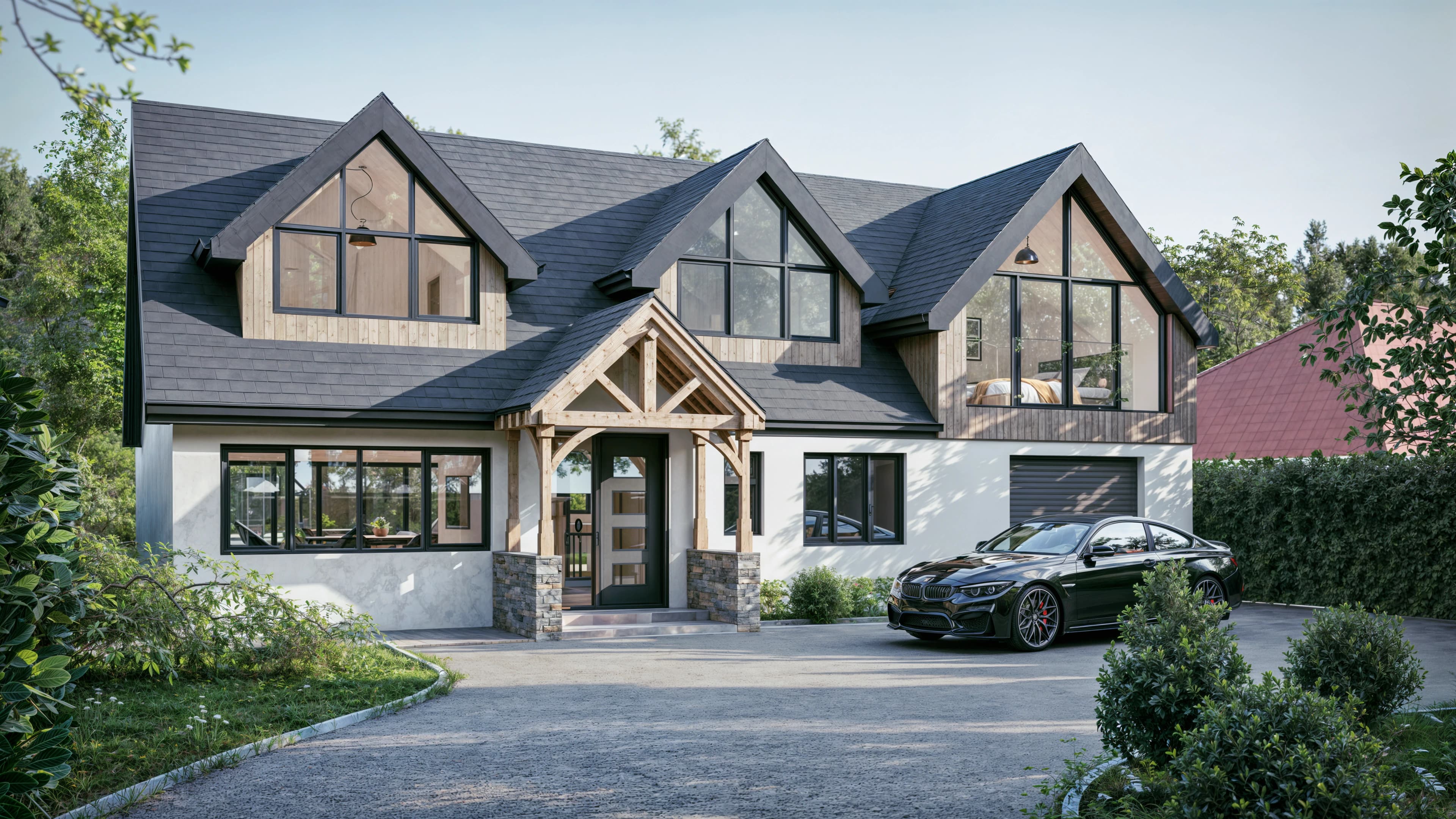
Planning permission in Dorset is decided by one of two councils. Dorset Council covers most of the county and BCP Council covers Bournemouth, Christchurch and Poole. The statutory time limit for a householder or small residential application is 8 weeks, unless you agree a longer period with the council in writing.
This guide was last checked in October 2026. Planning policy and fees change, and the councils' own pages are the authority.
Key facts
- Two councils have decided planning in Dorset since 1 April 2019: Dorset Council and BCP Council.
- From 1 April 2026 the national fee is £548 for a householder application and £610 per new dwelling (fewer than 10 homes).
- The statutory time limit is 8 weeks for most applications and 13 weeks for major development.
- Dorset Council charges £267 including VAT for written pre-application advice on a householder proposal.
- A net gain in homes is generally not permitted within 400 metres of protected Dorset heathland and needs mitigation between 400 metres and 5 kilometres.
- The Dorset National Landscape covers 1,129 square kilometres, approximately 42% of the county.
Which council decides planning in Dorset?
The deciding council depends on which side of a boundary the site sits, not on the postal address.
| Where the site is | Who decides |
|---|---|
| The former East Dorset, North Dorset, Purbeck, West Dorset and Weymouth and Portland districts | Dorset Council |
| Bournemouth, Christchurch and Poole | BCP Council |
| Hampshire, inside the New Forest National Park boundary | New Forest National Park Authority |
| Hampshire, in the New Forest district outside the National Park | New Forest District Council |
Dorset Council's online map, Dorset Explorer, shows the constraints that apply to a site. Near the Hampshire boundary, use the National Park Authority's postcode checker.
This guide covers Dorset Council. For Poole, Bournemouth and Christchurch, read our BCP Council planning guide. For Ringwood and the New Forest, read our New Forest National Park planning guide.
Do I need planning permission for an extension in Dorset?
Not always, because many house extensions fall within national permitted development rights. These apply to houses, not flats or maisonettes. The main limits are:
- A single-storey rear extension can project up to 4 metres on a detached house and 3 metres on any other house, and be up to 4 metres high.
- Those depths rise to 8 metres and 6 metres with a prior approval application to the council, which costs £249.
- Extensions and other buildings can cover no more than half the land around the original house.
The rights are tighter on designated land, which includes conservation areas, National Landscapes (formerly Areas of Outstanding Natural Beauty) and World Heritage Sites. There, all side extensions and all rear extensions of more than one storey need a householder application, exterior cladding is not permitted development and the larger prior approval depths do not apply.
Rights may also have been withdrawn by an Article 4 direction or a planning condition. Dorset Council says a listed building needs listed building consent before any work, inside or out.
If you are unsure, Dorset Council gives an informal written opinion on householder proposals for £130 including VAT. A lawful development certificate gives a legally binding decision. Our extensions and renovations service covers both routes.
What is the difference between a householder and a full application?
A householder application covers work to alter or enlarge a single house, including work within its garden. It cannot be used for flats, for more than one house or for a change of use. Those need a full application, as does a new or replacement home.
Dorset Council's validation list asks for more with a full application. New homes, including replacement dwellings, need a sustainability checklist and statement. One or more dwellings in a conservation area or World Heritage Site need a design and access statement.
How much does planning permission cost?
A householder application costs £548 and a full application for a new home costs £610 per dwelling, under national fees from 1 April 2026. A lawful development certificate for proposed work costs half the equivalent application fee. Listed building consent carries no fee. A Planning Portal service charge applies to online applications.
Community Infrastructure Levy (CIL) is separate. Dorset Council runs four charging schedules, for the former East Dorset, Purbeck, West Dorset and Weymouth and Portland areas, and does not operate CIL in the former North Dorset area. Government guidance says a new dwelling of any size is potentially liable, and that a self-build exemption must be obtained before work starts.
How long does planning permission take in Dorset?
The statutory limit is 8 weeks for most applications and 13 weeks for major development. The council can ask you to agree an extension of time, which must be in writing. If a non-major application is still undecided after 16 weeks with no extension agreed, government guidance says the fee is refunded.
What local rules apply to new homes in Dorset?
Two habitat rules apply to schemes that add homes or other overnight accommodation.
Dorset Heathlands. The joint Dorset Council and BCP Council framework, published for 2020 to 2025, lists a net gain in dwellings as generally not permitted within 400 metres of protected heathland. Between 400 metres and 5 kilometres, a net gain must provide mitigation.
Nutrient neutrality. Natural England has defined catchments in the Dorset Council area around Poole Harbour, the River Avon, the River Axe, Chesil and the Fleet, and the Somerset Levels and Moors. A net gain in residential units there needs a nutrient neutrality statement. In the Poole Harbour catchment, applicants must show neutrality for nitrogen and secure their own mitigation.
Both are worth checking at feasibility stage, before design work begins. See our new build homes service.
How do the Jurassic Coast and National Landscapes affect design?
They add to what a design has to address, and they remove some permitted development rights. The Dorset National Landscape was designated in 1959, and councils must seek to further the purpose of conserving and enhancing its natural beauty. Cranborne Chase National Landscape, which overlaps Dorset, has been an International Dark Sky Reserve since 2019. The Jurassic Coast, inscribed in 2001, is England's only natural World Heritage Site and runs for about 95 miles from Exmouth to Studland Bay.
Dorset Council asks for a lighting statement where external lighting is proposed in, or would affect, a National Landscape or the World Heritage Site. Landscaping proposals should take these designations into account.
What is the status of the Dorset Council Local Plan?
Dorset Council is preparing its Local Plan under the Government's new plan-making system and published its notice of intention on 31 July 2026. A scoping consultation runs from 21 September to 26 October 2026. The council's timetable, which it reviews monthly, expects adoption between February and August 2029.
Until then, the adopted local plans for the former council areas remain in place.
What if planning permission is refused?
You can appeal to the Planning Inspectorate. The deadline is 12 weeks from the date on the decision letter for a householder application and 6 months for most other applications.
Working with LUSO
LUSO Architecture is a CIAT Chartered Practice with studios in Poole and Ringwood. It prepares and submits planning applications, handles pre-application advice and building regulations drawings, and reports a 98% planning approval rate. Our extension and remodel in Ferndown shows work in the Dorset Council area. To discuss a site, contact the studio or call 01202 272112.
Common questions
Is Poole covered by Dorset Council for planning?
No. Poole, Bournemouth and Christchurch are covered by BCP Council. Dorset Council covers the rest of the county.
Can I build a new house within 400 metres of Dorset heathland?
Generally not. The Dorset Heathlands Planning Framework lists a net gain in dwellings as not permitted within 400 metres of protected heathland. Extensions and replacement dwellings with no net increase are generally permitted.
How much is pre-application advice from Dorset Council?
Written advice on a householder proposal costs £267 including VAT. For a scheme of 1 or 2 homes it costs £629, or £1,004 with a site meeting. The council aims to respond within 8 weeks.
Does CIL apply to a house extension in Dorset?
Dorset Council says CIL forms are not needed with a householder application unless you are creating an annexe. Government guidance exempts people extending their own home or building an annexe, subject to criteria and a claim made before work starts.
Sources
- Dorset Council: pre-application advice service
- Dorset Council: pre-application fees and administration charges
- Dorset Council: householder permitted development
- Dorset Council: National and Local List of Validation Requirements
- Dorset Council: Local Plan updates and timetable
- Dorset Council: adopted local plans
- Dorset Council: Dorset Heathlands Planning Framework
- Dorset Council: Dorset Heathlands Planning Framework 2020 to 2025 document
- Dorset Council: nutrient neutrality in the Poole Harbour catchment
- Dorset Council: Community Infrastructure Levy
- Planning Portal: guide to fees for planning applications in England from 1 April 2026
- Planning Portal: what it costs
- Planning Portal: extensions and permitted development
- Planning Portal: householder planning consent
- GOV.UK: determining a planning application
- GOV.UK: fees for planning applications
- GOV.UK: when is permission required
- GOV.UK: lawful development certificates
- GOV.UK: Community Infrastructure Levy guidance
- GOV.UK: appeal a householder planning decision
- GOV.UK: appeal a planning decision
- GOV.UK: Planning Inspectorate
- GOV.UK: Jurassic Coast World Heritage Site
- legislation.gov.uk: The Bournemouth, Dorset and Poole (Structural Changes) Order 2018
- Dorset National Landscape: Management Plan 2026 to 2031, chapter 2
- Cranborne Chase National Landscape: International Dark Sky Reserve
- Cranborne Chase National Landscape: about the National Landscape
- New Forest District Council: submit a planning application
- New Forest National Park Authority: planning
- New Forest National Park Authority: planning frequently asked questions