
Insights · planning · 9 min read
Planning permission in the New Forest National Park: what homeowners need to know
LUSO Architecture
CIAT Chartered Practice · 8 October 2026
Inside the National Park boundary, planning applications are decided by the New Forest National Park Authority. Outside it, across the rest of New Forest district, the planning authority is New Forest District Council. The rules are stricter inside the park: householder permitted development rights are reduced, and the Authority's Local Plan limits how far most homes can be extended or enlarged on replacement.
Last checked: October 2026. Planning policy changes, and the Authority's own pages are the authority on every point below.
Key facts
- The National Park Authority decides planning applications inside the park boundary under its Local Plan 2016 to 2036, adopted on 29 August 2019.
- Policy DP36: outside the four Defined Villages (Ashurst, Brockenhurst, Lyndhurst and Sway), an extension must not add more than 30% to the floorspace of the dwelling as it stood on 1 July 1982.
- A "small dwelling" (80 square metres or less on 1 July 1982) can be extended to no more than 100 square metres in total.
- Policy DP35: outside the Defined Villages, a replacement dwelling should be no larger in floorspace than the existing one.
- A National Park is "article 2(3) land", so side extensions, rear extensions of more than one storey, roof additions and cladding all need planning permission.
- The national householder application fee is £548 from 1 April 2026. Most applications should be decided within eight weeks.
- Each net new dwelling carries a habitat mitigation contribution of £4,540 in 2026.
Is my property inside the National Park?
Check first, because a New Forest address does not settle it. The Authority says some addresses with a New Forest postcode fall under neighbouring planning authorities, and it provides a postcode checker and an interactive property map. New Forest District Council has its own postcode lookup for its area.
Do I still have permitted development rights in the National Park?
Yes, but fewer than elsewhere. National Parks are article 2(3) land under the General Permitted Development Order 2015, where the following are not permitted development for a house:
- cladding the exterior in stone, render, timber, plastic or tiles
- any extension beyond a side wall of the original house
- a rear extension of more than one storey
- additions to the roof, and additional storeys
- the larger single storey rear extension allowed elsewhere under prior approval
- outbuildings to the side of the house
In a National Park, outbuildings more than 20 metres from the house are also limited to 10 square metres in total. Flats have no permitted development rights.
Rights can also be removed by a planning condition or an Article 4 direction. For a formal answer, apply for a Lawful Development Certificate (Proposed), at half the normal application fee.
How much can I extend a house in the New Forest National Park?
Outside the four Defined Villages, by no more than 30% of the floorspace of the "existing dwelling" under Policy DP36:
- "Existing dwelling" means the house as it existed on 1 July 1982, or as originally built if later. Extensions added since count against the 30%.
- A small dwelling is capped at 100 square metres in total.
- Inside a Defined Village there is no floorspace limit for other dwellings, but the extension must still suit the house and its curtilage.
- Up to 120 square metres may be allowed in exceptional circumstances, for the genuine family needs of an occupier who works in the immediate locality.
The Local Plan states that the 30% limit "is not an allowance or entitlement". A scheme that meets the size test can still be unacceptable for other reasons, such as design. See our extensions and renovations service.
Can I replace a house in the National Park?
Yes in most cases, under Policy DP35, but outside the Defined Villages the new house should be no larger in floorspace than the one it replaces. Replacement is not permitted where the existing dwelling results from a temporary permission or unauthorised use, or makes a positive contribution to the historic character of the locality.
The Authority's guidance allows unused DP36 allowance to be included at the same time, provided it reads as an extension, but the 30% can only be used once.
What are the rules for garages and outbuildings?
Policy DP37 permits domestic outbuildings that are proportionate and clearly subservient to the house, sit within its residential curtilage, are needed for incidental purposes and do not provide additional habitable accommodation. The Authority normally attaches a condition excluding any use as habitable floorspace.
Can I build a new home in the National Park?
Only in limited circumstances. Policy SP19 supports new housing on allocated sites, within the Defined Villages, on rural exception sites and for commoners, estate workers and agricultural workers. Policy SP21 caps new dwellings at 100 square metres.
Every net new dwelling must also mitigate its effect on protected habitats:
- Recreation: £4,540 per net new dwelling in 2026 towards the Authority's Habitat Mitigation Scheme, plus a further contribution within 5.6km of the Solent's protected sites.
- Nutrients: nitrogen neutrality in the Solent catchments or phosphate neutrality in the River Avon catchment, with a Nutrient Mitigation Checklist submitted with the application.
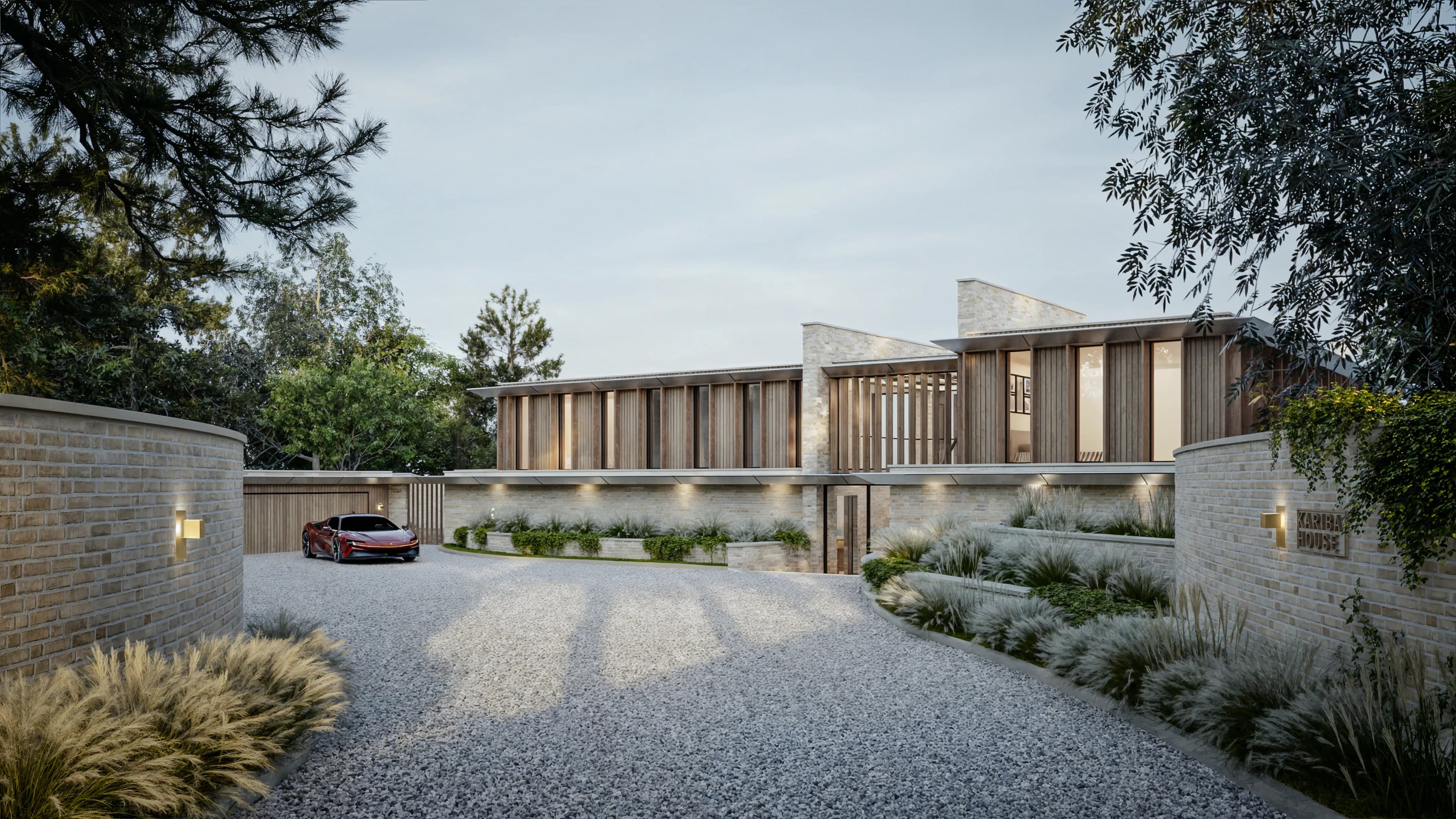
See our new build homes service, or Kariba House, a lakeside new home in the New Forest.
What about conservation areas and listed buildings?
Both add a further layer of control. The park has 20 conservation areas and more than 600 listed buildings. Listed building consent is needed for any alteration, internal or external, that affects a listed building's character. There is no application fee for it.
How do the rules differ outside the park?
The main difference is in the towns, because in the countryside the district council applies a similar 30% limit.
| Inside the National Park | New Forest District outside the park | |
|---|---|---|
| Decided by | National Park Authority | New Forest District Council |
| Main plan | Local Plan 2016 to 2036 (2019) | Local Plan Part 1 (2020) and Part 2 (2014) |
| Extension limit | 30% outside the four Defined Villages (DP36) | 30% in the countryside outside defined built-up areas (saved Policy DM20) |
| Permitted development | Reduced everywhere | Standard, unless a conservation area or similar designation applies |
How do I apply, and what does it cost?
Start with pre-application advice, then apply through the Planning Portal.
- Free advice: the Authority's duty officer is on 01590 646615, 10:00am to 11:45am, Tuesday to Thursday.
- Written pre-application advice from 1 April 2026: £96 for a householder enquiry, £196 for a single or replacement dwelling. A written reply follows within 15 working days.
- National application fees from 1 April 2026: £548 to extend or alter a house, £610 for each new dwelling on schemes of fewer than ten.
The Authority's Design Guide, adopted on 27 January 2022, is a material consideration in planning decisions across the park.
Who can prepare an application in the New Forest?
LUSO Architecture is a CIAT Chartered Practice with studios in Canford Cliffs, Poole and at Crow Arch Lane, Ringwood, on the edge of the Forest. The practice prepares and submits planning applications, handles pre-application advice and building regulations drawings, and reports a 98% planning approval rate. Local work includes Mount Pleasant Lane in Lymington and Seymour Road in Ringwood. See our New Forest and Ringwood pages, call 01202 272112 or get in touch.
Common questions
Do I need planning permission for a loft conversion in the National Park?
If it adds to or enlarges the roof, such as a dormer, yes. Roof additions are not permitted development on article 2(3) land.
Does the 30% limit apply in Brockenhurst, Lyndhurst, Sway or Ashurst?
Not within the Defined Village boundaries shown on the Authority's Policies Map, except for small dwellings, which stay capped at 100 square metres. Outside those boundaries the 30% limit applies, so check the map and not the postal address.
Does an extension built in the 1990s count towards the 30%?
Yes. The baseline is the dwelling as it existed on 1 July 1982, so later extensions have already used part or all of the allowance.
Is the Local Plan changing?
A review is under way. Consultation on the Submission draft ran from 17 August to 30 September 2026, and the Authority intends to submit it for independent examination in December 2026. This guide quotes the plan adopted in 2019, so check the Authority's review page for changes.
Sources
- New Forest National Park Authority: Local Plan page, adoption date and review consultation dates
- New Forest National Park Authority: Local Plan 2016 to 2036, Policies SP4, SP5, SP19, SP21, DP35, DP36 and DP37
- New Forest National Park Authority: Local Plan review 2025 to 2027
- New Forest National Park Authority: domestic extensions and replacement dwellings guidance
- New Forest National Park Authority: planning home page and postcode checker
- New Forest National Park Authority: interactive property map
- New Forest National Park Authority: planning frequently asked questions
- New Forest National Park Authority: do I need planning permission
- New Forest National Park Authority: pre-application advice
- New Forest National Park Authority: pre-application fees from 1 April 2026
- New Forest National Park Authority: the application process
- New Forest National Park Authority: mitigating impacts on protected areas
- New Forest National Park Authority: mitigating recreational and nutrient impacts
- New Forest National Park Authority: developer contribution levels for 2026
- New Forest National Park Authority: Design Guide Supplementary Planning Document
- New Forest National Park Authority: conservation areas
- New Forest National Park Authority: listed buildings
- New Forest District Council: planning guidance for householders
- New Forest District Council: Development Plan
- New Forest District Council: Local Plan Part 2, saved Policy DM20
- Legislation.gov.uk: General Permitted Development Order 2015, Schedule 1, article 2(3) land
- Legislation.gov.uk: General Permitted Development Order 2015, Schedule 2, Part 1
- Planning Portal: extensions and designated land
- Planning Portal: guide to planning application fees in England from 1 April 2026
- GOV.UK: determining a planning application